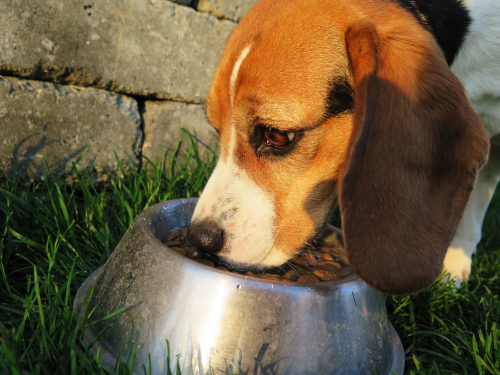
It is a jarring experience for any pet parent: you walk past your normally sweet, affectionate dog while they are eating, and they suddenly stiffen, bare their teeth, or let out a low, warning growl.
Food aggression, clinically known as resource guarding, is a highly stressful behavioral issue, but it is entirely treatable. By understanding the root cause and changing how your dog views your presence around their food, you can transform mealtime from a tense standoff into a relaxed, positive experience.
Understanding Why Your Dog Guards Their Food To fix the behavior, you first have to understand it. Food aggression is not about your dog trying to be the “alpha” or dominate you; it is a deeply ingrained survival instinct. In your dog’s mind, their food is a high-value resource, and your approach signals a threat that their resource might be stolen. The growl is simply them saying, “I am afraid you are going to take this, please back off.”
Crucial Mistakes to Avoid Before starting any training protocol, you must eliminate outdated, dangerous advice that will actually make the aggression worse.
- Never punish the growl: A growl is an early warning system. If you yell at or hit your dog for growling, you are teaching them that growling is unsafe. The next time you approach, they may skip the warning entirely and go straight to a bite.
- Stop messing with their food: A common myth is that you should constantly take your dog’s bowl away to “show them who is boss.” This only confirms their worst fear—that you are a thief—and heavily increases their mealtime anxiety.
Step-by-Step Training to Fix Food Aggression The ultimate goal of this training is to change your dog’s emotional response to your approach. You want them to learn that a human approaching their bowl does not mean they lose food, but rather that they gain something even better.
1. Create a Secure Dining Environment Set your dog up for immediate success by removing their stress. Feed them in a quiet, low-traffic room, behind a baby gate, or in their crate. Give them the space they need to eat without constantly looking over their shoulder.
2. Play the “Trade Up” Game You need to establish that your presence brings high-value rewards.
- While your dog is eating their standard kibble, stand at a safe distance where they can see you but are not reacting or stiffening.
- Toss a piece of ultra-high-value food (like boiled chicken, hot dog, or cheese) near their bowl.
- Walk away immediately.
- Repeat this over several meals, gradually decreasing the distance you stand from the bowl as your dog becomes visibly relaxed and excited for you to toss the treat.
3. The Empty Bowl Technique Once your dog is comfortable with you being near them while they eat, switch up the routine.
- Place their empty bowl on the floor.
- Walk up to the bowl, drop a small handful of their regular meal into it, and step back.
- Once they finish that handful, approach and drop another handful in.
- This completely rewires their brain: instead of viewing you as someone who takes food away, you become the magical source that delivers the food.
4. Hand Feeding For mild cases, ditching the bowl entirely for a few weeks can work wonders. Hand-feeding your dog their meals piece by piece builds massive amounts of trust and strongly reinforces the bond between you and your dog.
When to Call a Professional If your dog’s food aggression has already escalated past growling to snapping, lunging, or actively biting, do not attempt to train this out on your own. Resource guarding can be dangerous. Reach out to a certified, positive-reinforcement canine behaviorist who can safely guide you and your dog through a tailored desensitization program.